How team trailblazers prepared for victory in the Remembrance Relay Walk
BY GLORIA IRANKUNDA
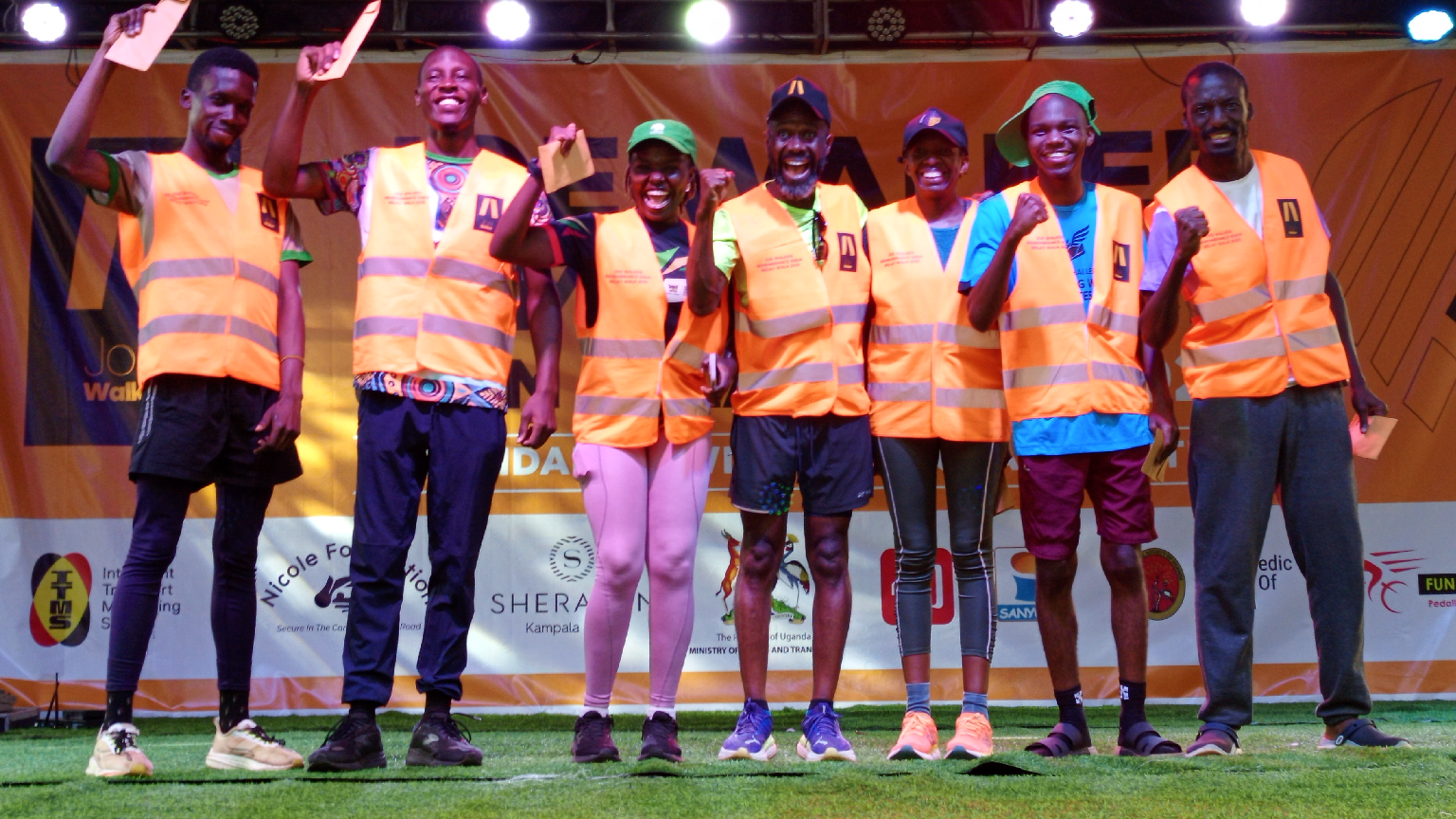
For the second year in a row, team trailblazers crossed the finish line at the Joe Walker remembrance walk, completing the 60-kilometre relay ahead of everyone else.
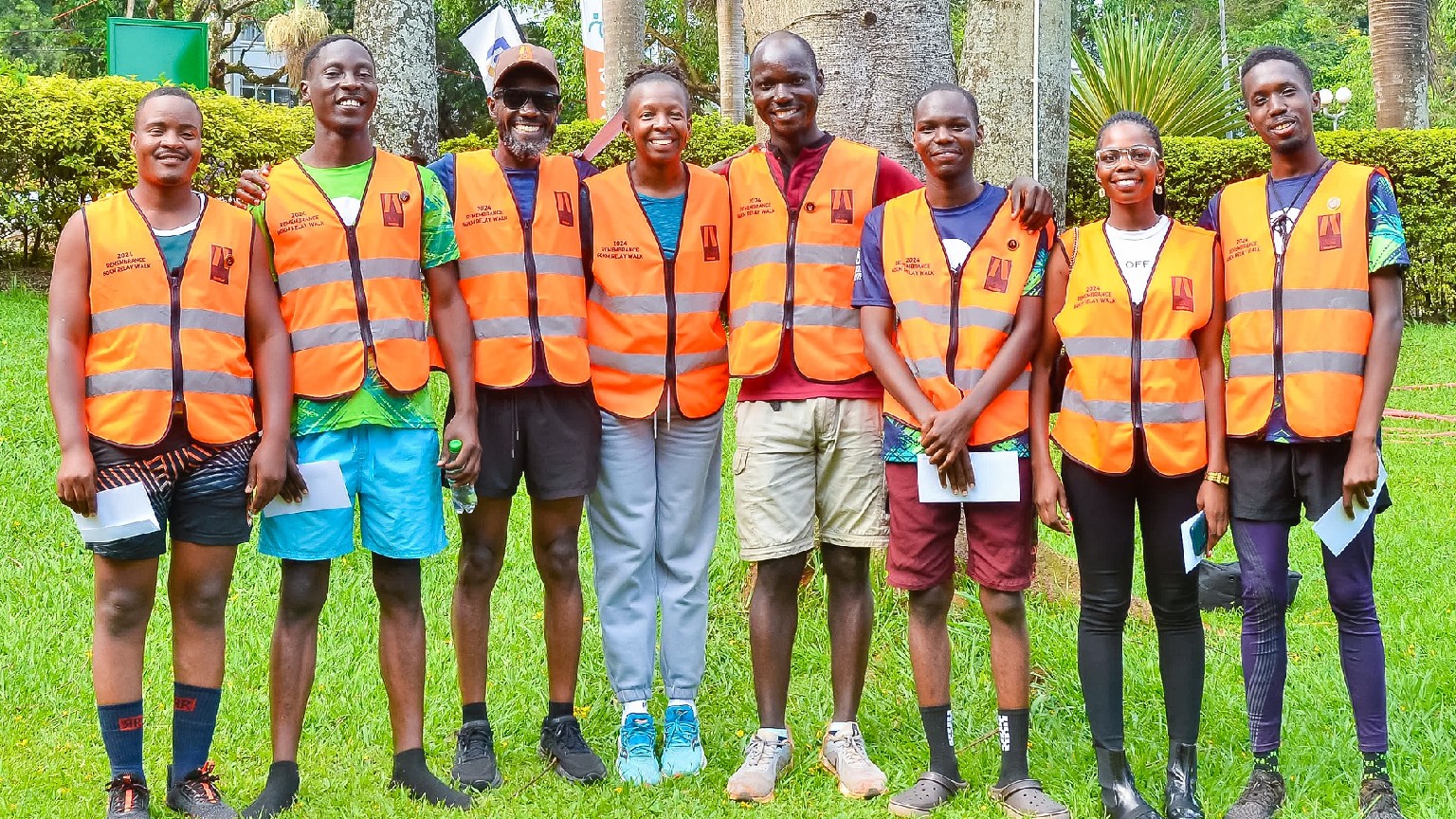
The team’s six members, Ken Ndandiko Kayiri, Mark Tushabe Kakuru, Sharifah Nalubwama, Moses Vubbya, Brian Mutono and James Makumbi, finished in 8 hours, reflecting their preparation and focus.
Tushabe shared that each member was required to run at least four hours a week in preparation for the remembrance walk. That discipline kept them ready for the 10-kilometre stretches.
“On the D-day, each member brought good vibes and energy simply by being confident and disciplined, ” Tushabe said.
Behind their victory is a mix of strategy, discipline, and an understanding of why they walk.
Motivation
For Ndandiko, the drive throughout the walk came from the energy around him. The atmosphere of people walking for remembrance, advocacy and loved ones carried him through the tougher segments.
“I was with my teammates before and during the walk, and seeing other walkers on the road kept me going,” he shared.
Nalubwama, a recreational runner, says her determination started long before she stepped onto the route.
“Honouring the lives lost on roads and standing with families who have been affected kept me focused. Every step reminded me why we were walking,” she said.
For Mutono, his motivation was mental. He focused on the outcome, refusing to drift into distractions along the route. And for Vubbya, a passionate sportsman and runner, the team’s status as defending champions added pressure but also fuel.
“Knowing that the team had won before, made it easier to draw on mental strength,” he said.
A team that trains
Team Trailblazers draw their strength from daily routines and disciplined fitness. Ndandiko runs at least 20 kilometres a week to stay in shape. Mutono’s nine year experience of running and walking long distances enables him to cover more than 10km a day.
“I train in all weather conditions and I am part of Makerere Run Club where we converge to walk or run 10 kilometres every Wednesday, a practice that keeps me accountable,” he explained.
Nalubwama maintains consistency with her three-to-four weekly runs and walks. She pairs this with healthy eating and hydration.
Vubbya follows rigorous training programmes that instills both endurance and speed.
Strategy
Team trailblazers did not win by accident. Their success came from careful planning. Individual effort prepared their bodies, while team training sharpened their coordination.
Ndandiko says the team combined individual fitness with thoughtful discussions on who starts and who finishes.
“We know who is faster among us and that informed the order. Each member brought strengths in pace, commitment, and hard work,” he shared.
Mutono explained that each person’s segment was determined by speed, endurance, and recovery rate.
“We started with someone strong to give us a head start. The next people maintained the lead,” he explained.
Vubbya added that their fastest runners were reserved for the final 30 kilometres, the toughest stretch because of the heat.
“Saving our speed stars for the last loops was crucial. That is how we secured a strong finish, “he said.
Nalubwama said they also considered conditions. Some members perform best early in the morning, others comfortably take on the heat. That awareness ensured each person walked when they were naturally strongest.
Coordination was another pillar of their strategy. Mutono explained that they ensured continuous communication, before, during, and after each loop, they guided each other and ensured no one wasted time during a handover.
“We also shared live locations to help the next runner prepare for their segment,” Nakubwama said.
Even the basics were handled well. “We urged everyone to be at the exchange point on time,” Ndandiko said. In a race where every second counted, punctuality was the difference.
Overcoming hurdles
Despite their strength, the race did not run smoothly. Nalubwama struggled on the hilly parts. “They did not hit me as hard because my teammate had briefed us about them,” she says. Mentally preparing for difficult sections helped her keep pace.
Mutono recalls a tense moment when the team’s second runner was overtaken.
“When I got the baton, I had to close a 2-kilometre gap. I increased my pace, caught up with our opponent around Jinja Road, pushed ahead, and turned the deficit into a three-kilometre lead,” he said. That shift restored the team’s confidence and set the tone for the rest of the race.
For Vubbya, the biggest challenge was the heat. As someone taking on the later segments, he faced both the scorching sun and the psychological pressure of being part of a defending champion team. “It was extremely tough, but the trust my team had in me kept me going,” he said.
What set them apart
Organisation, good coordination and a solid rally strategy is what set the team apart, they said.
For Mutono, a road accident survivor, the walk was both personal and symbolic. “It reminded me of what I survived and why safer roads matter,” he says.
Nalubwama said she became more intentional about how she moves and advocates for road safety. “Hearing stories of families affected by accidents changed my view of the fragility of life” she shared.
Vubbya sees himself now as a stronger advocate. Completing the relay walk with his teammates deepened his commitment to road safety awareness. “Runners, cyclists, and pedestrians are equal road users and they all need this awareness ,” he emphasised.